
Why Natural Light Matters More Than You Think
- Jul 8
- 2 min read
You don't need medication or another supplement to start fixing your energy, sleep and mood. You need about ten minutes outside, at the right time of day, without sunglasses on.
Morning light sets your clock
Deep in your brain, a small cluster of cells called the suprachiasmatic nucleus acts as your master circadian clock — and it resets daily based on light hitting your eyes. Bright morning light suppresses melatonin (the sleepy hormone) and supports your natural cortisol peak (the "cortisol awakening response"), which is what gives you alertness to start the day. Think of cortisol as your friend and natural caffeine in the morning.
Get morning light consistently, and melatonin arrives on schedule at night too, helping you fall asleep more easily. But if you pick up your phone (blue-rich light) first thing in the morning and miss that early natural light your whole rhythm runs late, and this is where your circadian clock gets into a muddle!
Evening light should fade, not spike
Blue-rich light from phones, laptops and overhead LEDs suppresses melatonin and delays sleep readiness, even if you don't feel "wired." Dimming your environment in the two to three hours before bed helps your body wind down on schedule.
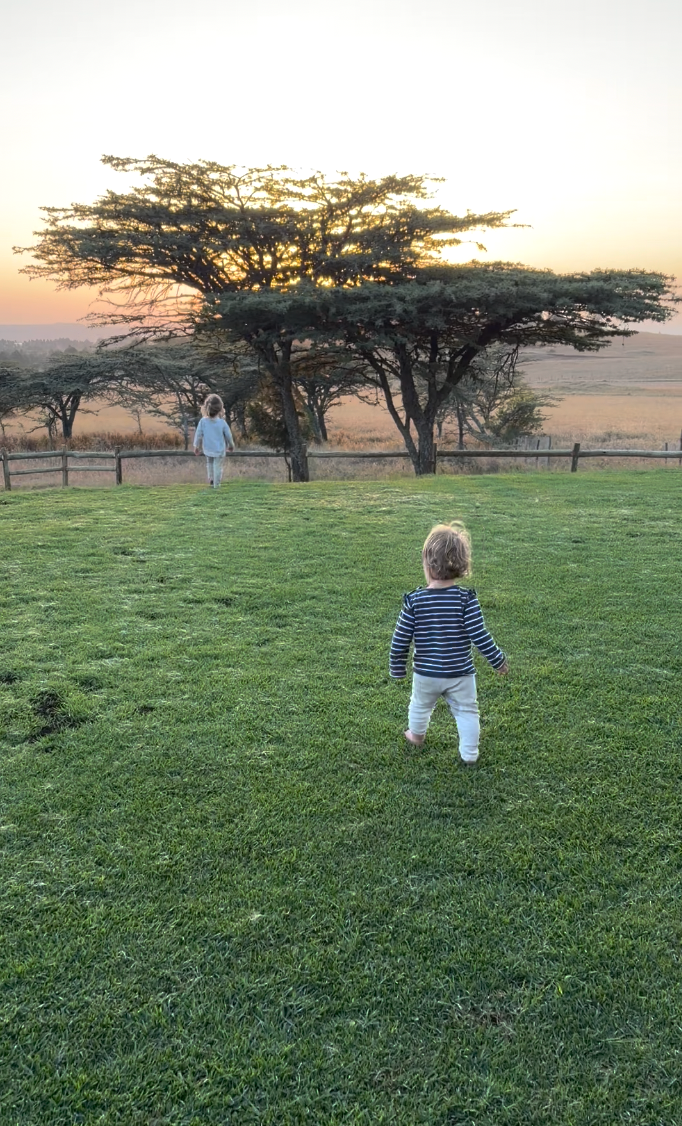
This is also where sunset earns its keep. As the sun drops, the light reaching you naturally shifts towards warmer, lower-intensity red and orange tones — very different from the flat blue-white glow of a ceiling light or a screen. Your circadian system reads that shift as a genuine "day is ending" cue, distinct from simply "less light." It's part of why a short walk at sunset can leave you feeling calmer in a way that dimming a lamp indoors doesn't quite replicate — you're not just reducing light, you're giving your body the specific signal it's built to respond to.

There's a mitochondrial angle too.
Your mitochondria contain an enzyme, cytochrome c oxidase, that's especially good at absorbing red and near-infrared light — the wavelengths that dominate sunrise and sunset. Early research (mostly using concentrated light devices, so still an emerging area rather than confirmed science) suggests this can support ATP production, your cells' energy output. It's a compelling second reason to get outside into that low, reddish morning and evening light.
Putting this into practice
Get outside within an hour of waking, sunglasses off if you can — 10–20 minutes is enough...Why not enjoy your tea or coffee outside
Catch the sunset when possible — whilst walking is an extra bonus
Dim lights and screens in the evening
Consistency matters more than any single "perfect" day
Dealing with fatigue or sleep issues that lifestyle tweaks haven't shifted? Get in touch with Fiona...


Comments